
Local Food, Starring Your Students!
Posted on June 8, 2026
Warning: this video contains a growling bear, very serious egg safety advice, and a whole lot of fourth-grade enthusiasm.
“All these adults are talking about farm to school, but how can we make it real for the students? They’re eating the food, but they may not know that it’s from a local farm, or how any of it got to us here at school.”
Kindergarten teacher Amy Poor was looking to find a way to make those big, complex ideas behind local food more relatable to the elementary students at Underhill Central School in Vermont. Farm to school is a relatively new initiative in the district, but it was showing up across the schools in multiple ways — like taste tests, school gardens, and local purchasing in the cafeterias — and Amy saw the need for some “connecting the dots moments” to build awareness and show the ‘why’ behind all the efforts.
Amy rounded up some eager fourth graders, connected with the district’s IT Manager, Mike Weber, and got to work. “The kids were excited, they felt special and part of something bigger,” Amy shares. Over the course of a few recess periods, the group was able to create a heartwarming video for their school community.
“I sent it to all the principals in our district, and we were invited to play the video during the fall
all-school meeting, and, oh my gosh, everybody was so entertained! The students were so excited to see the crowd laughing. And the rest of the school was able to see their friends and connect the dots between the food and farms in the video and what they eat in the cafeteria.”
Interested in creating a video with your students? Take some tips from Amy’s process:
- Get a tech-savvy partner! If you’re new to making videos, find an IT Manager, educator, library media specialist, or parent who can help. Amy and Mike used a green screen, We Video, and a handful of fun costumes and props. “The kids had a lot of fun standing in front of a green screen and thinking about all these live pictures of what we would put in behind them during editing.”
- Offer students ownership where you can. Amy drafted the general script and flow, but “everybody got to choose their part, what they’d be doing on the screen, what they would wear, and fun things like sound effects and corny jokes.”
- You don’t need to be a videographer. Amy offers alternative storytelling methods: puppet shows, stop-motion with clay, or a low-tech "news frame" in the garden. “It could be a simple frame posted in the garden to look like a channel three news broadcast or something, and kids could take turns getting behind it and pretending they're on the news reporting about what's growing in the garden! I think they would love that.”
Amy and the Mount Mansfield Unified Union School District are a 2025-26 Northeast Farm to School Institute team. Learn more about their farm to school efforts in High Mowing Organic Seeds’ recent story.
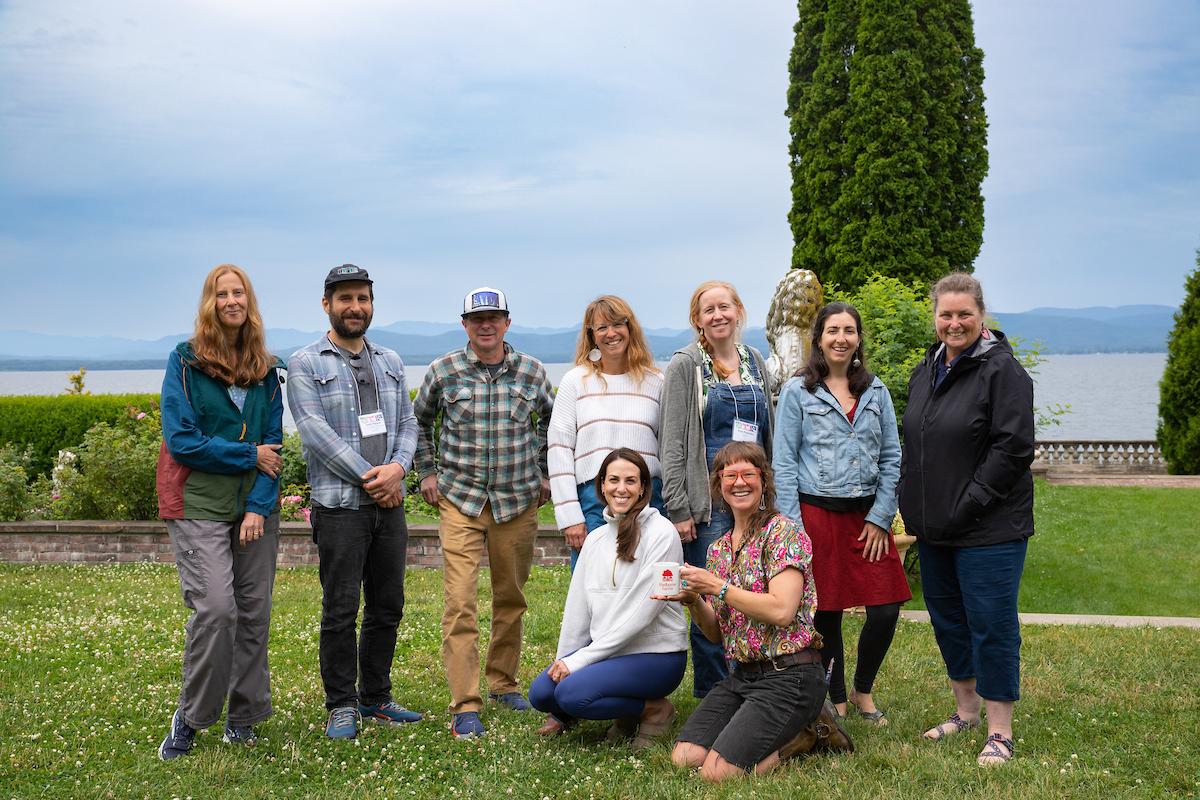
The Mount Mansfield Unified Union School District team at the Northeast Farm to School Institute at Shelburne Farms (Amy pictured middle, standing). Photo by Sarah Webb.